![Metalldetektor kaufen – Testsieger & Angebote [2026] Große Auswahl](https://test.bergemagnet.de/templates/metalldetektor/img/logo_head.png)
Hobby guide for metal detectorists & Treasure hunters
Searching for historical objects with a metal detector is one of the most fascinating activities. In recent years, the hobby has inspired more and more people interested in history and archaeology. The often lengthy research into historical facts, the search in often charming landscapes, exercise in the fresh air and nature, and ultimately the exciting recovery of coins and objects that provide direct contact with the past and the history of our people are impressions that remain unforgettable.
Who hasn't dreamed of going on a treasure hunt?
We watch with excitement on television as valuable treasures are discovered all over the world. Disappeared war chests, family treasures, offerings to the gods etc. etc. - Imagination knows no bounds here. Impossible, something like that doesn’t exist here?!

Beach finds

Roman hoard find
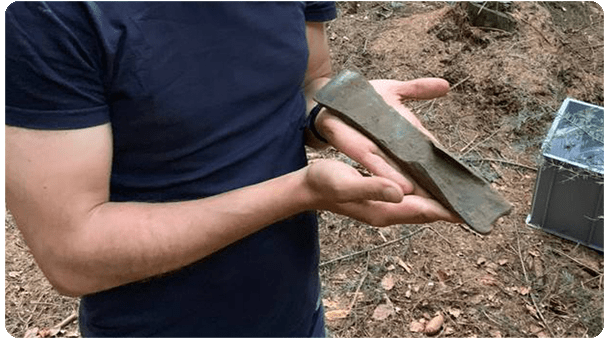
Bronze Age flap axe
A large proportion has never been unearthed since, whether our parents and ancestors were taken prisoner, murdered or died in the turmoil of war. Discovering all these small and large treasures is not only historically meaningful and important but also an adventure that will inspire you, the Adventure - Treasure Hunt!
What do I want to search for and where can I find it?
This consideration should come first in treasure hunting. Whether you are searching for euro coins, militaria or medieval coins, you will be successful in Germany! And definitely! I cannot take over information gathering and research for you. I just want to list some possible search locations here. Please observe the ethical behavior and legal provisions that must be observed for the benefit of all those interested in history. (see also Code of Honor)
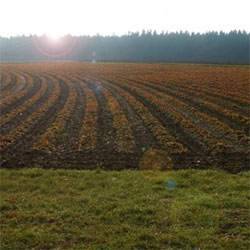
Fields are the main search area for the vast majority of all detectorists! After thorough research, anything can be found here. Finds from deserted places of all periods, militaria, modern times etc. etc. Digging is easy and the chance of discovery is greatest here; this is where you'll find the most.

Millers in earlier times were usually respected and also wealthy contemporaries. There was delivery traffic at mills, everything had to be unloaded by hand, so you can imagine that there is also an increased find rate for old coins at such spots.
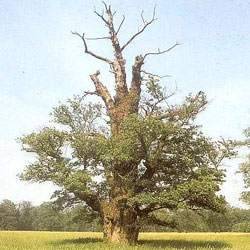
Striking large trees at clearings or at roadsides often served as meeting points, landmarks and places to rest.
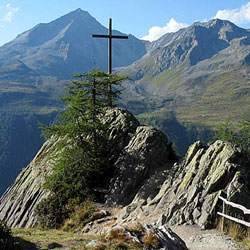
Hills in valley entrances and exits / viewpoints: Watchtowers were often present at these spots in order to recognize approaching dangers more quickly. In combination with other watchtowers within sight, these often also served as a communication network, i.e., a kind of "early warning system".
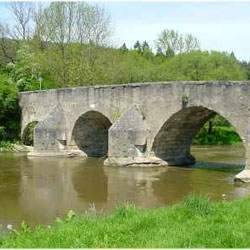
Romans tossed coins with good wishes into the water when crossing bridges. Horses were watered and rested at fords along historic routes.
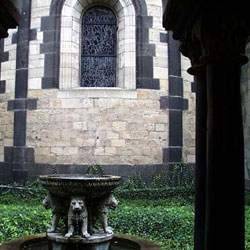
Wells and jetties are always good for searching with salvage magnets. Weapons, ammunition, DM coins, Reich coins (nickel), old agricultural equipment, etc. are often found in wells. At jetties you’ll find tools, fishing hooks, engine parts up to complete outboards.
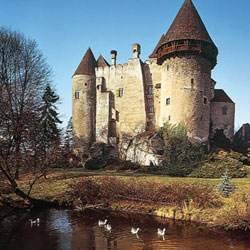
The surroundings of castles are particularly interesting outside the ramparts. The typical range of finds in castle searches includes coins, crossbow bolts, weapons and corresponding parts, horse harness, rings, keys, locks, belt buckles, etc. Under old lavatories and kitchen windows there is an increased occurrence of cutlery, coins and jewelry. Searching here requires approval!
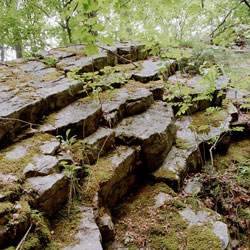
Rocks, rock formations and especially solitary menhirs are frequent cult and sacrificial sites, meeting places and can even be ancient observatories. Here the full spectrum of finds can be found, with an increased chance of early historic finds.

If the owner agrees, the floor should be prospected during renovations. Old half-timbered houses were often newly built over again. Old vaults and wine cellars are very interesting; here too the walls should definitely be scanned with the detector.
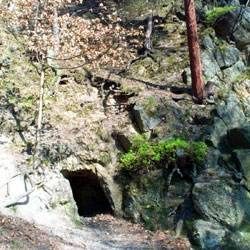
Caves provided shelter from the weather and served as dwellings, sacrificial and burial places and treasure hideouts since ancient times. Searching in caves is very promising! The innermost and lowest corners and rock wall fissures deserve special attention. Attention! Never enter caves between October and April; many caves are hibernation sites for bats, and if disturbed during hibernation, they must die miserably! Help protect these wonderful and rare animals! Also observe all necessary safety measures. Many good cave guides are available in bookstores.
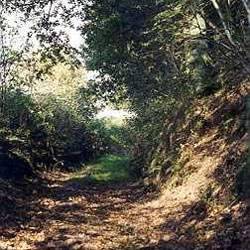
Germany is covered by old hollow ways, paths that were used long ago and then fell into disuse. These roads were once very busy. Over the years, water deepened the hollows, so today we see deeply cut ways. Searching along these ways yields a wide range of finds, reaching back to the Bronze Age.

Many springs and bogs were already sacred to the Germanic peoples and sacrifices were made to the gods there for a variety of reasons, as is assumed today. Human sacrifices were even made at springs until the early Middle Ages. Only with Christianization were these barbaric rituals forbidden and prohibited under penalty.
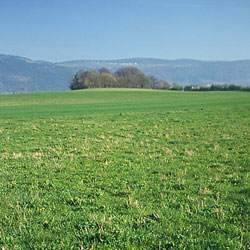
There have been battlefields in Europe for more than 2500 years; whoever discovers a Roman battlefield is very lucky. But most are those from the 1st and 2nd World War. In these places, you can find a variety of militaria, coins, all kinds of weapons, badges, dog tags, emblems, buttons, and unfortunately still dangerous ammunition from the 1st and 2nd World Wars. If you can’t help searching here, you should dig with great caution!
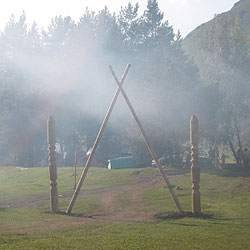
100% chance of finds; modern coins are also guaranteed here. Due to the extreme scrap content of such locations, a lot of patience is required.
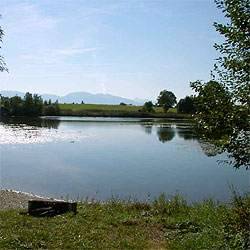
Here too, the chance of finds is 100%. Coins and jewelry are guaranteed. Hardworking searchers have often financed their vacations this way. It's also possible to find old coins or other valuable metal objects washed up as flotsam.
The list of interesting search spots could be continued, but would exceed the scope of information here. Interested in treasure hunting? Then contact us and become a successful detectorist and treasure hunter yourself!
Order & advice: 0173 8707075
Monday to Thursday: 9.00 am - 5.00 pm
Friday: 9.00 - 12.00 pm







Metalldetektor kaufen – Testsieger & Angebote [2026] Große Auswahl © 2026 | Template © 2009-2026 by modified eCommerce Shopsoftware